
GPS Tracking Related
Can a GPS Tracker work without SIM card
Sep
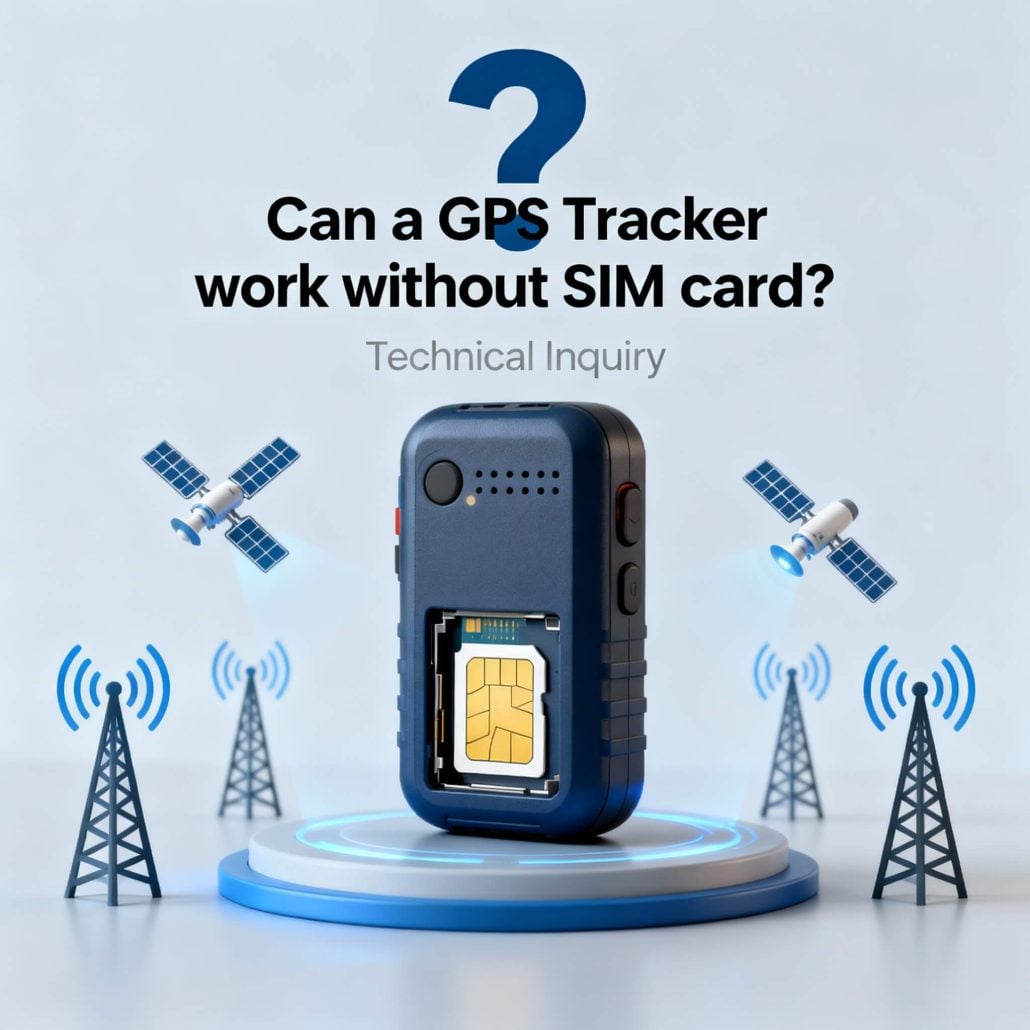
Can a GPS Tracker work without a SIM card? Short Answer: No!
A GPS tracker cannot provide real-time location tracking without a SIM card because the SIM card is essential for transmitting location data over cellular networks to external devices or servers. However, there are GPS trackers without SIM cards, such as GPS loggers and Bluetooth trackers, which can only operate within limited ranges or store data locally without real-time updates.
Why a SIM Card is Essential for GPS Trackers
A GPS tracker works by receiving satellite signals to determine its location. However, satellites only provide location data to the device itself—they do not facilitate communication of this data to users. The GPS tracker needs a way to send this information, preferably in real-time, to a user’s smartphone, computer, or tracking platform. This communication is done via cellular networks, which requires a SIM card like those found in mobile phones.
The SIM card enables the tracker to connect to the mobile network to transmit location data continuously. Without a SIM card, the tracker has no cellular network access, so it cannot send location information remotely. The user would only be able to see location data if physically accessing the device and extracting stored logs. Real-time alerts, online monitoring, and remote control functions depend on the cellular connection provided by the SIM card.
Types of GPS Devices That Can Work Without SIM Cards
Some GPS devices can operate without a SIM card, but with significant limitations:
-
GPS Loggers: These devices record location data internally by receiving satellite signals but do not transmit data. Users must retrieve the device physically to download the stored location history. They work well for recording trips or movements over time but lack real-time monitoring capabilities.
-
Bluetooth Trackers: These utilize Bluetooth to communicate with nearby smartphones or devices without cellular networks. However, their range is limited to short distances, typically a few dozen meters, making them unsuitable for tracking over large areas.
-
Satellite GPS Trackers: Some specialized trackers use satellite communication (not cellular) for remote tracking without SIM cards but tend to be more expensive and used in specialized fields like maritime or wilderness tracking.

How Do GPS Trackers Without SIM Card Transmit Location?
Some modern devices combine various technologies to work without SIM cards:
-
Use Wi-Fi or Bluetooth connections to nearby smartphones or access points to transmit location data intermittently (not continuous real-time tracking).
-
Employ low-power wide area networks like LTE-M or NB-IoT (which still require connectivity but sometimes do not need traditional SIM cards).
These alternatives, however, do not replace the dominant role of SIM cards in enabling broad, real-time GPS tracking.
Limitations of GPS Trackers Without SIM Cards
-
Limited or no live real-time tracking over long distances.
-
Dependence on physical retrieval to obtain stored data if not connected.
-
Limited communication range in the case of Bluetooth trackers.
-
Less suitable for vehicle tracking, fleet management, or security where live updates are critical.
Examples of GPS Trackers with SIM Cards
Many commercial GPS trackers, such as those from Teltonika, come with SIM card slots and support 2G, 3G, 4G LTE cellular connections for global real-time tracking. Devices like the Teltonika FMC003 OBD tracker, Teltonika FMB640, and portable trackers like the TMT250 require SIM cards for their operation and online tracking features.
Summary
-
GPS trackers rely on SIM cards to send location data via cellular networks for real-time tracking.
-
Without a SIM card, GPS devices cannot transmit data remotely; they either store data locally or work in limited short-range modes.
-
Devices without SIM cards include GPS loggers and Bluetooth trackers, practical only for specific use cases and limited ranges.
-
For real-time asset, vehicle, or personal tracking over wide areas, GPS trackers with SIM cards remain essential.
This detailed explanation helps clarify why a GPS tracker cannot work effectively without a SIM card for real-time tracking, while outlining options and limitations of SIM-less GPS devices.
